Meta-Ads
Meta Ads Performance Analytics


Meta Ads are digital advertisements placed across Facebook, Instagram, Messenger, and the Audience Network, allowing businesses to target users based on demographics, interests, and behavior. Formerly known as Facebook Ads, this system uses data-driven, highly customizable ad formats like videos, images, and carousels to increase brand awareness, website traffic, and sales.
Project Overview
- This project focuses on analyzing social media advertising campaign performance using SQL and Power BI. The dataset contains information about ad campaigns, individual advertisements, user demographics, and user interaction events such as views and clicks.
- The objective of the project is to explore how different advertising strategies perform across platforms like Facebook and Instagram.
- By combining campaign data, advertisement details, and user interaction events, the project aims to uncover insights related to audience targeting, engagement patterns, and campaign effectiveness. The analysis is performed using SQLite for data cleaning and analytical queries, and Power BI for interactive dashboards and visualization of key marketing insights.
Data Sources
The dataset used in this project is a simulated digital advertising dataset designed to represent advertising campaigns running on social media platforms such as Facebook and Instagram. The data contains information about ad campaigns, individual ads, user demographics, and user interactions with advertisements. The dataset is organized into four CSV files that represent different entities within a marketing campaign ecosystem. These files were imported into SQl, Excel,Power BI and used for data cleaning, SQL analysis, and visualization.
1. ad_events.csv
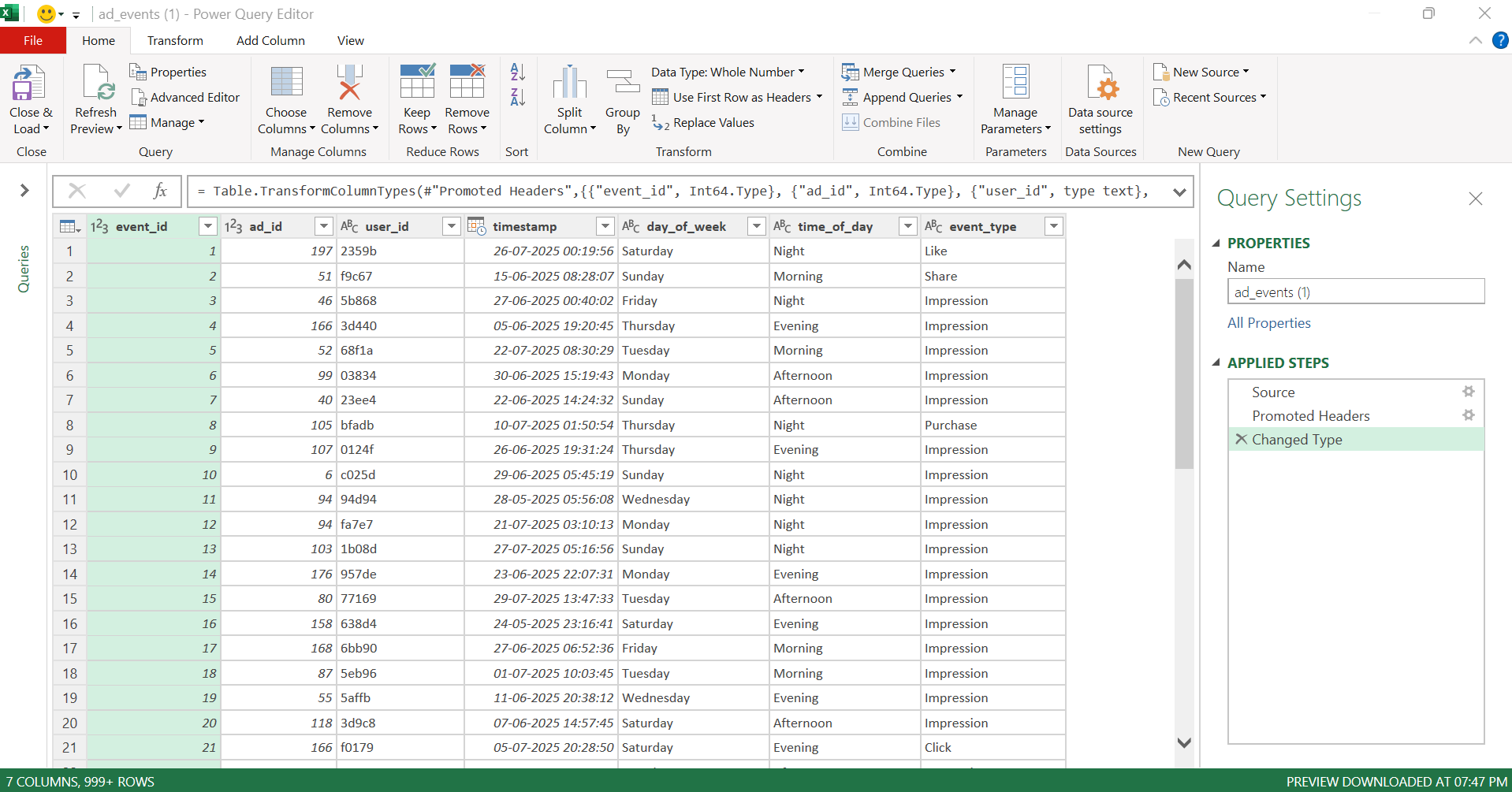
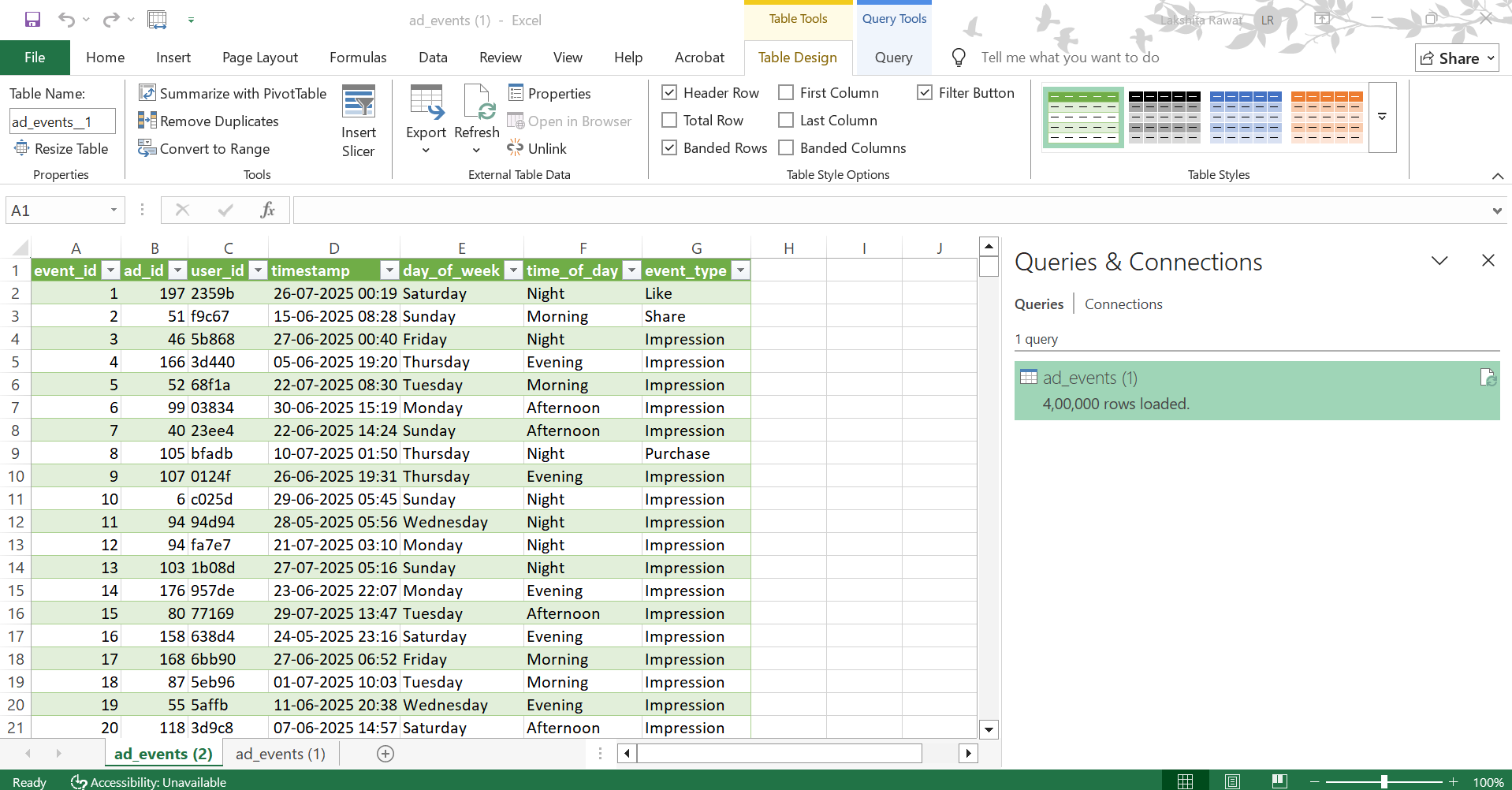
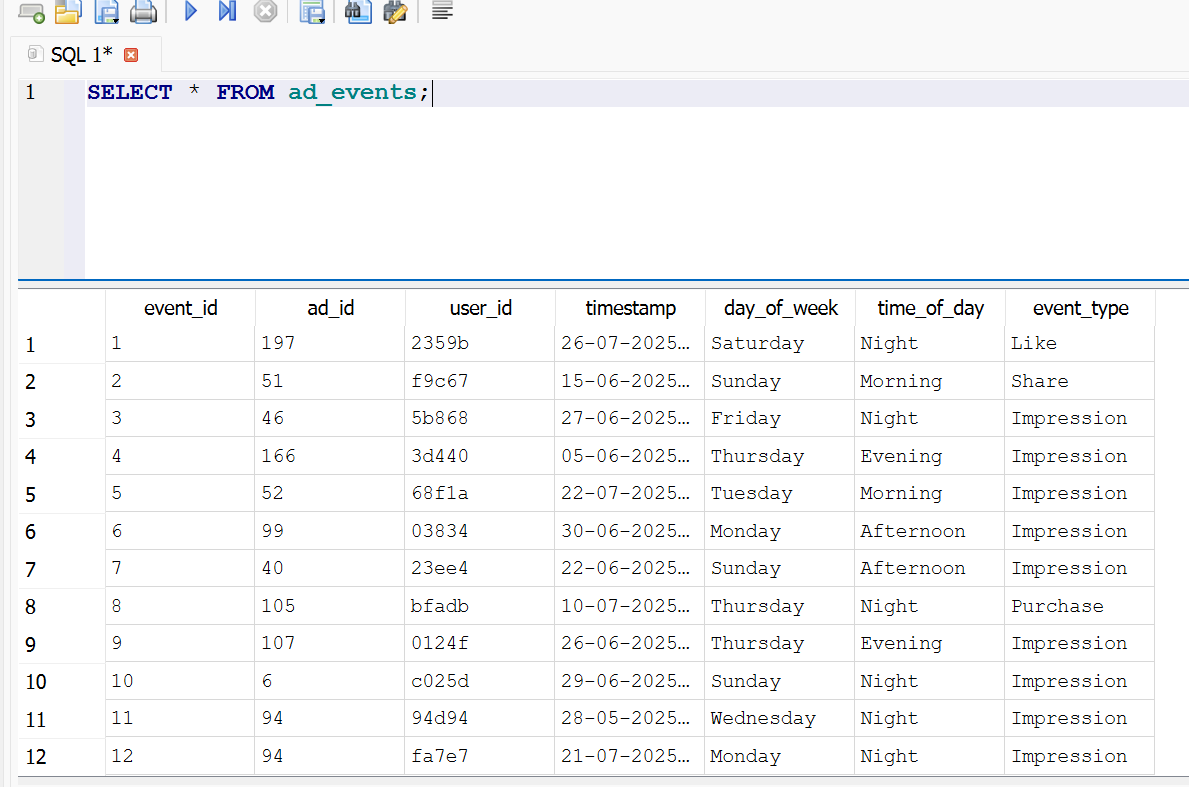
This file contains user interaction data with advertisements. Each record represents an event triggered by a user when interacting with an ad.
- event_id – unique identifier for each event
- ad_id – identifier linking the event to a specific ad
- user_id – identifier of the user who interacted with the ad
- timestamp – time when the event occurred
- day_of_week – day when the interaction happened
- time_of_day – categorized time period (morning, afternoon, evening, night)
- event_type – type of interaction (e.g., view, click, engagement)
2. campaigns.csv
This dataset contains campaign-level information describing the marketing campaigns under which ads are grouped.
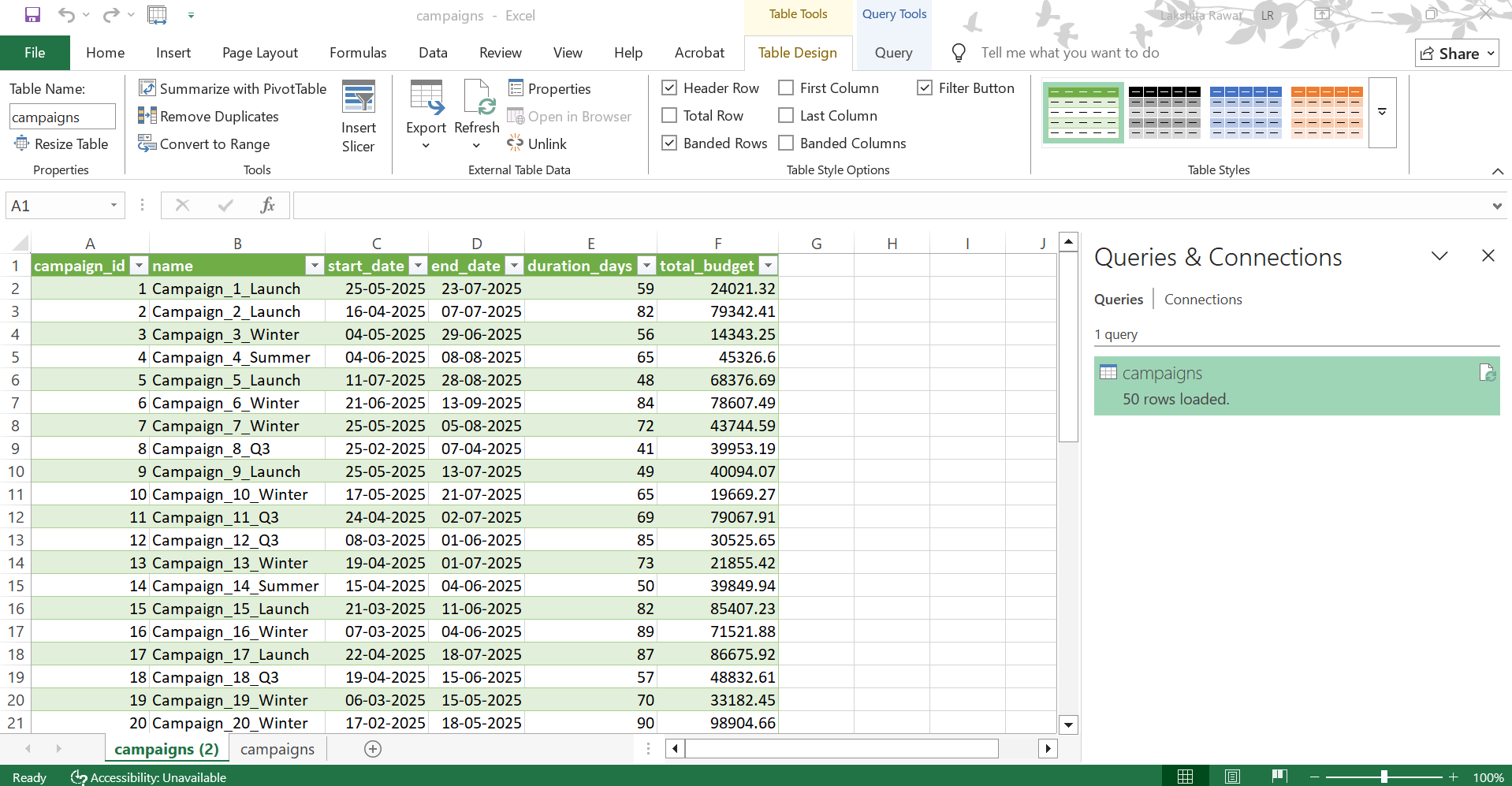
- campaign_id – unique identifier for each campaign
- campaign_name – name of the campaign
- start_date – campaign start date
- end_date – campaign end date
- duration – total campaign duration
- total_budget – allocated budget for the campaign
3. ads.csv
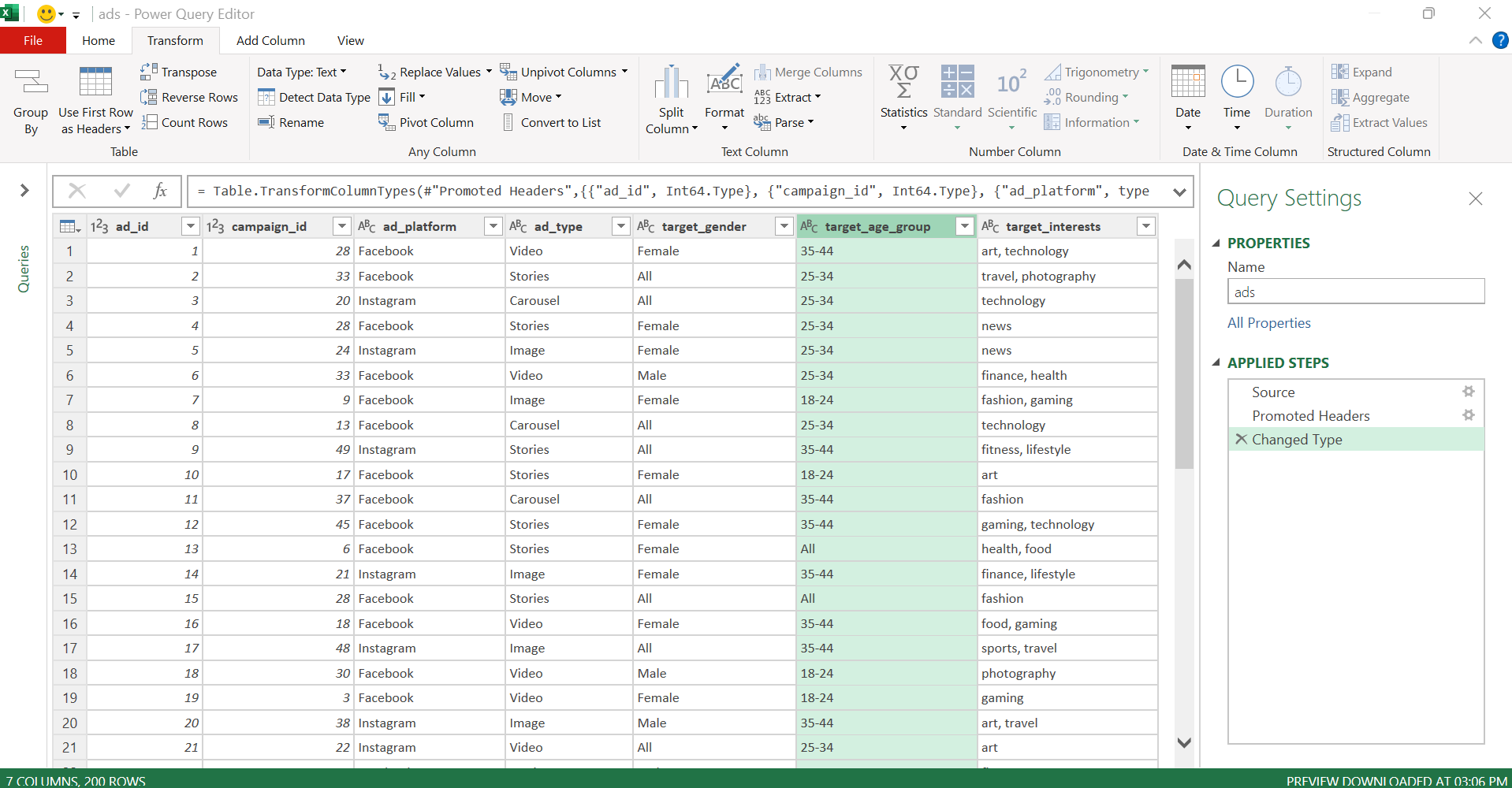
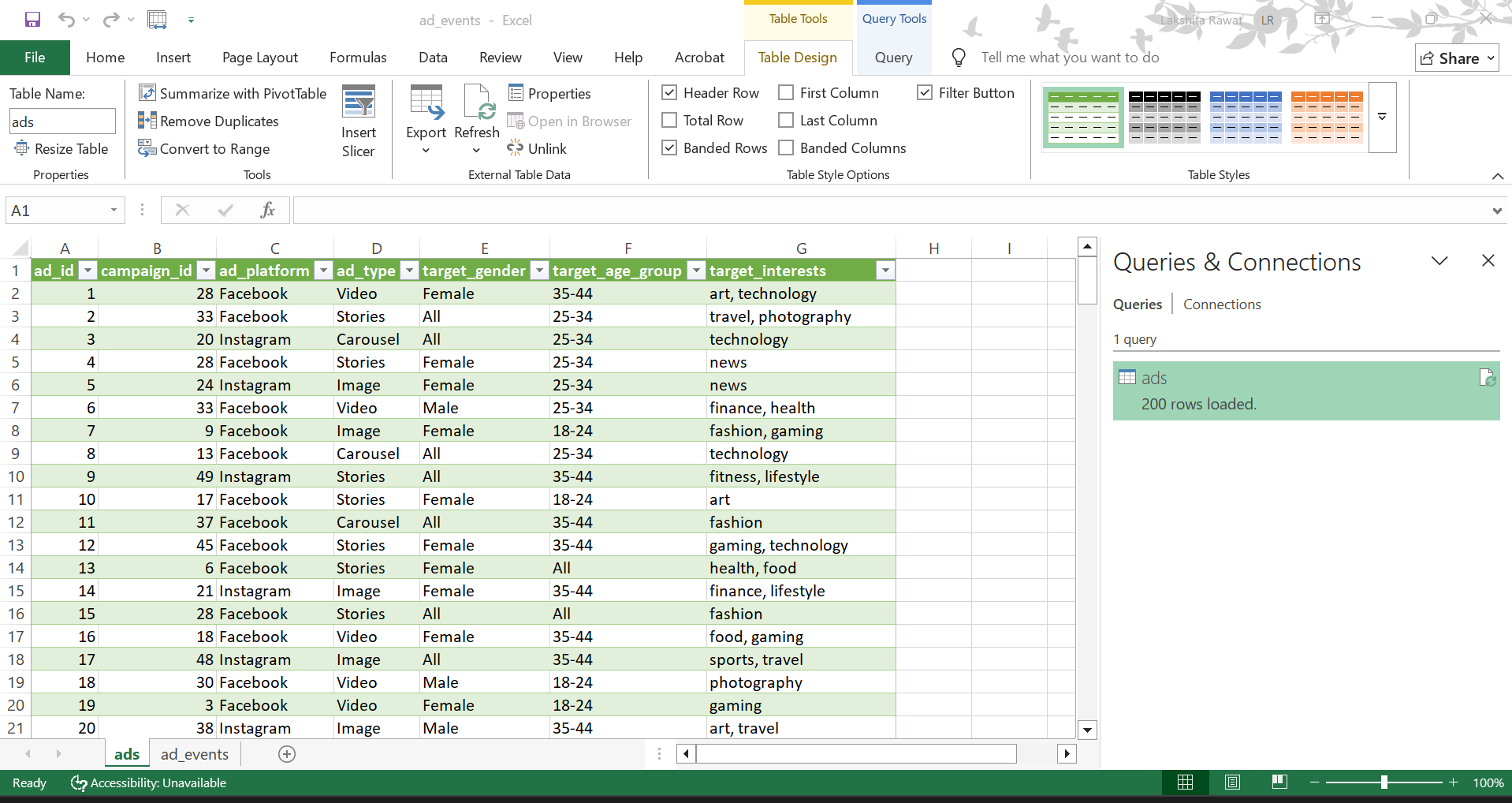
This file provides detailed information about individual advertisements.
- ad_id – unique identifier for each ad
- campaign_id – identifier linking the ad to its campaign
- ad_platform – platform where the ad was displayed (Facebook or Instagram)
- ad_type – type of advertisement (image, video, carousel, etc.)
- target_gender – gender targeted by the advertisement
- target_age_group – age group targeted by the ad
- target_interest – audience interest category used for targeting
4. users.csv
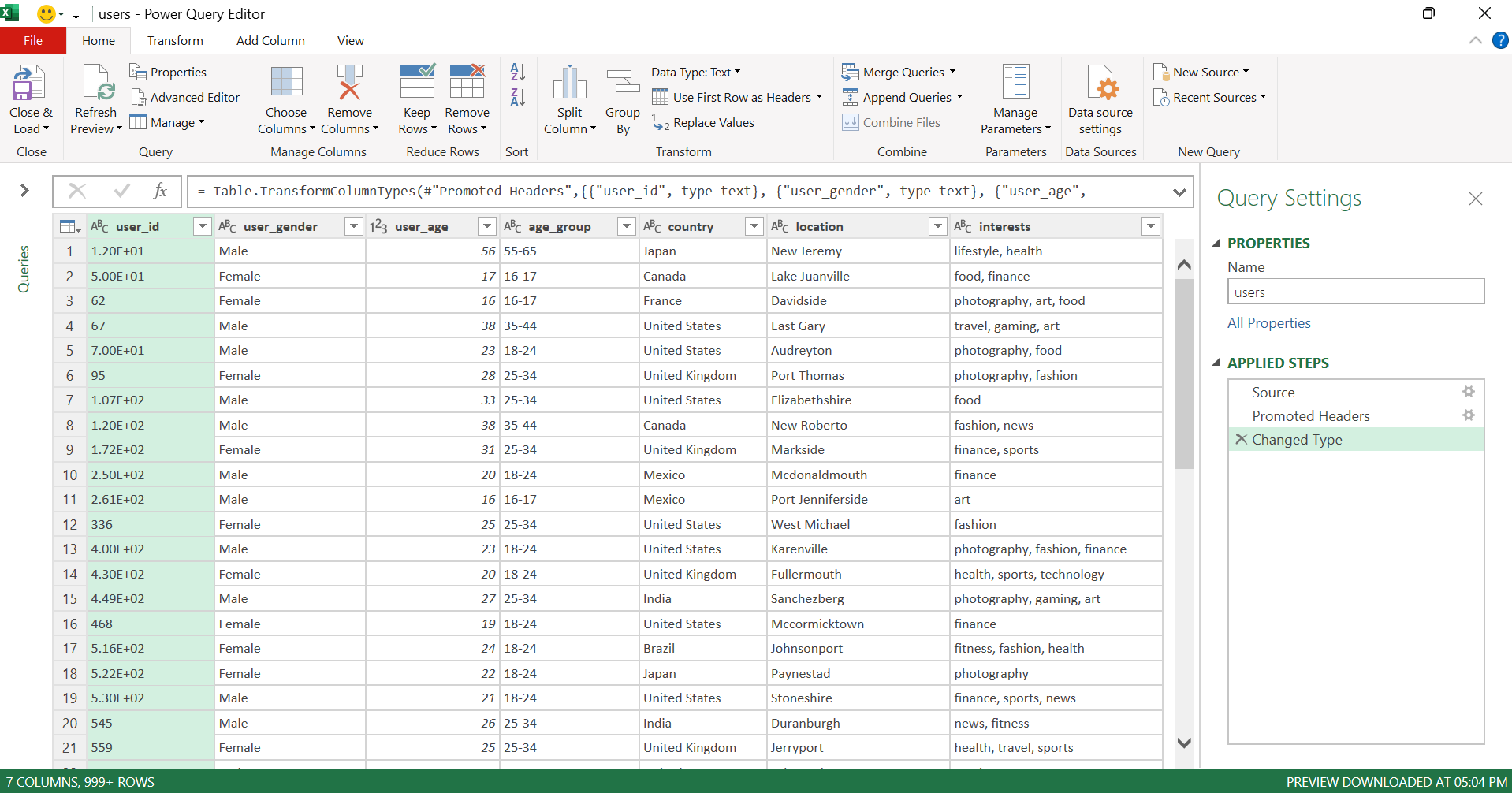
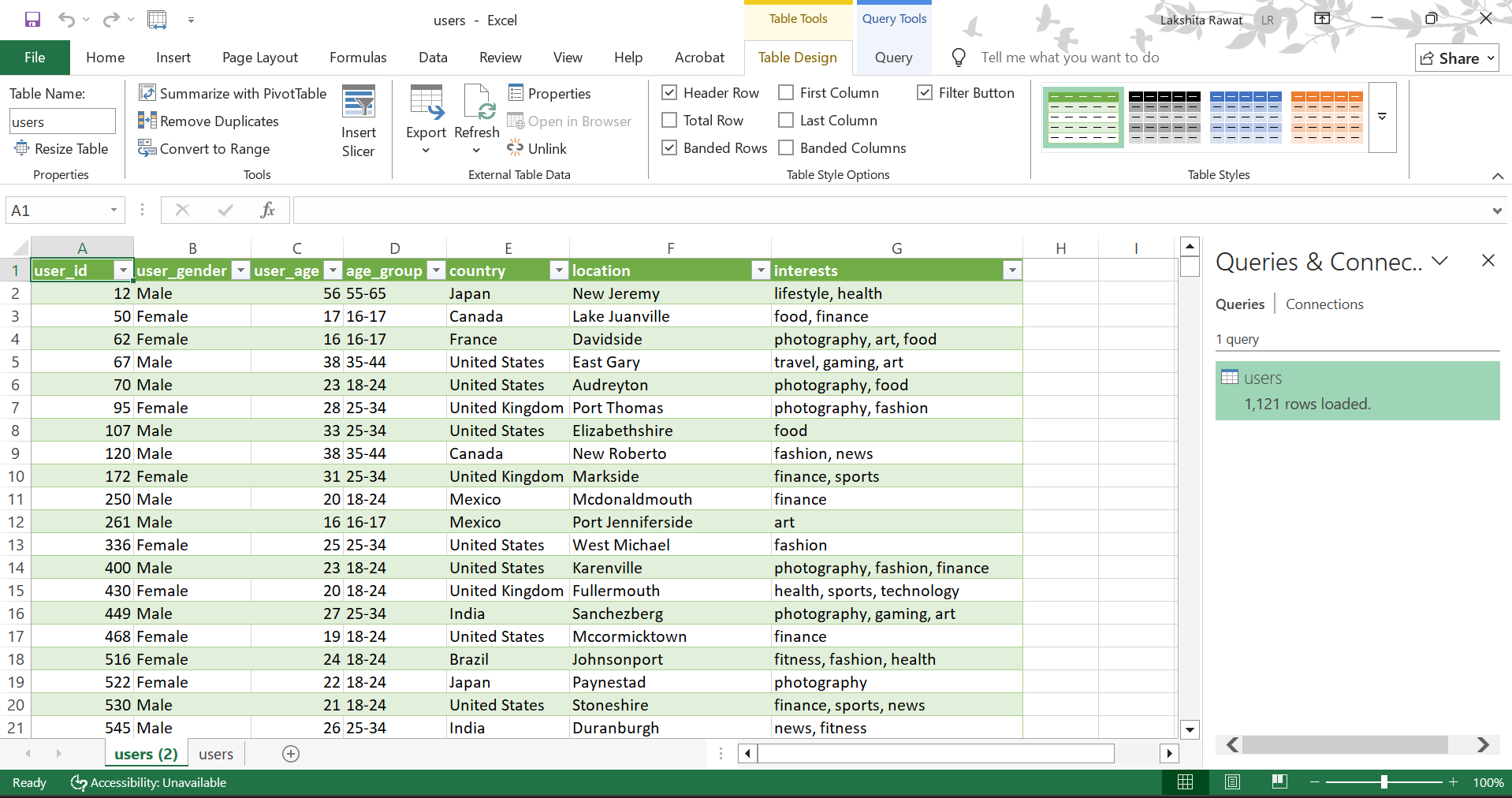
This dataset contains demographic and interest information about users who interacted with the ads.
- user_id – unique identifier for each user
- user_gender – gender of the user
- age – age of the user
- age_group – categorized age range
- country – user’s country
- location – city or region of the user
- interest – user’s primary interest category
Data Cleaning and Processing
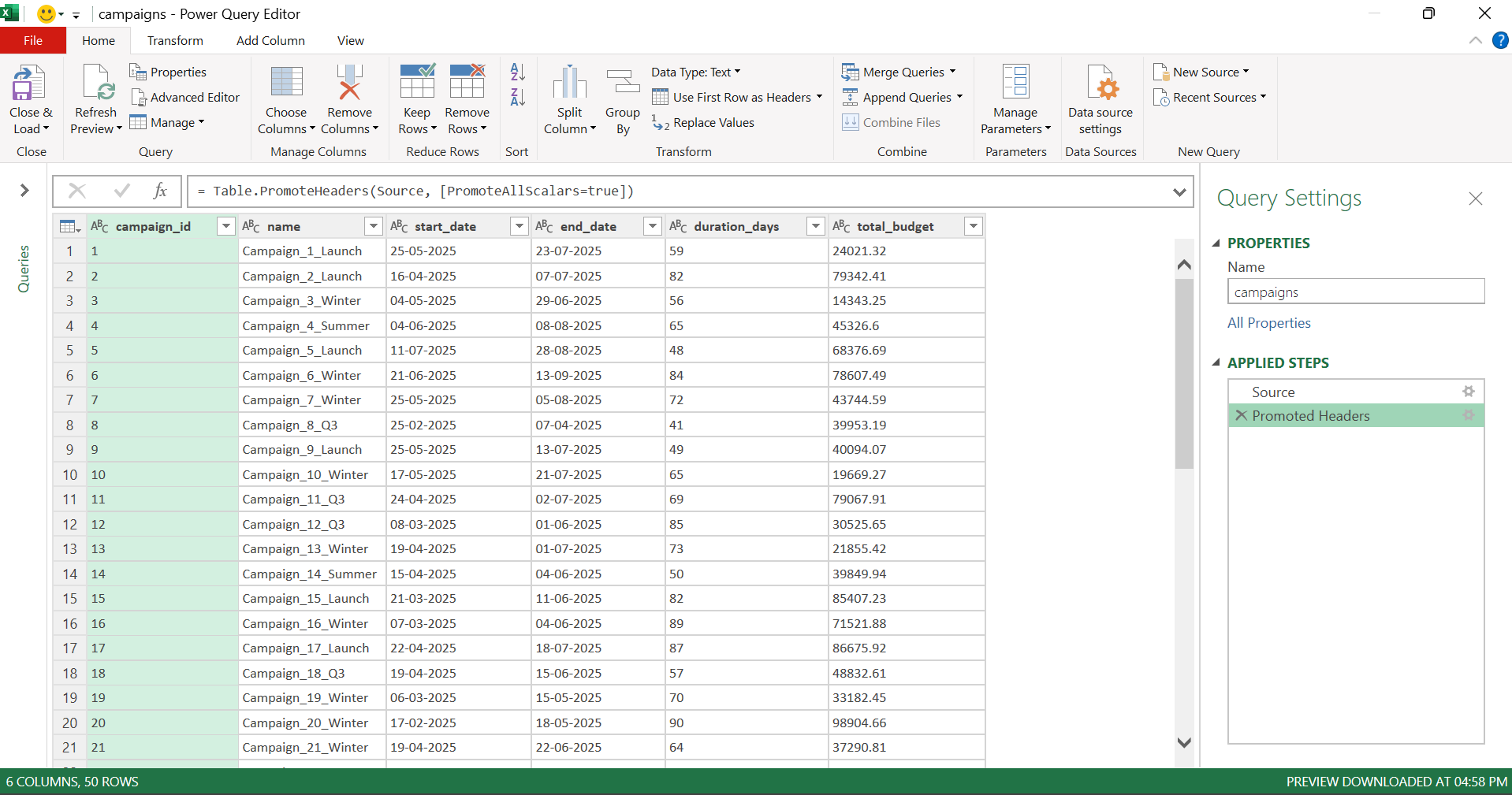
Before performing SQL analysis, the raw data was cleaned and prepared using Microsoft Excel Power Query to ensure accuracy, consistency, and usability for further analysis.
1. ad_events.csv
Raw Data
Cleaned Data
2. ad.csv
Raw Data
Cleaned Data
3. campaign.csv
Raw Data
Cleaned Data
4. users.csv
Raw Data
Cleaned Data
Database Schema
After data cleaning, the datasets were imported into a SQLite database for relational analysis. The database consists of four tables representing different components of a digital advertising system.
- campaigns – Contains campaign-level information such as campaign name, duration, and budget.
- ads – Stores details about individual advertisements, including platform, ad type, and targeting attributes.
- users – Contains demographic information about users who interacted with advertisements.
- ad_events – Records user interactions with ads such as views, clicks, or engagements along with timestamps.
These tables are connected through unique identifiers:
- campaign_id links ads to campaigns
- ad_id links ad_events to ads
- user_id links ad_events to users This relational structure enables deeper analysis of campaign performance, audience engagement, and targeting effectiveness.
SQL Analysis
SQL was used to perform detailed marketing analytics on the cleaned dataset.
1. Event Funnel & Engagement Depth Analysis
(How users interact with ads across funnel stages)
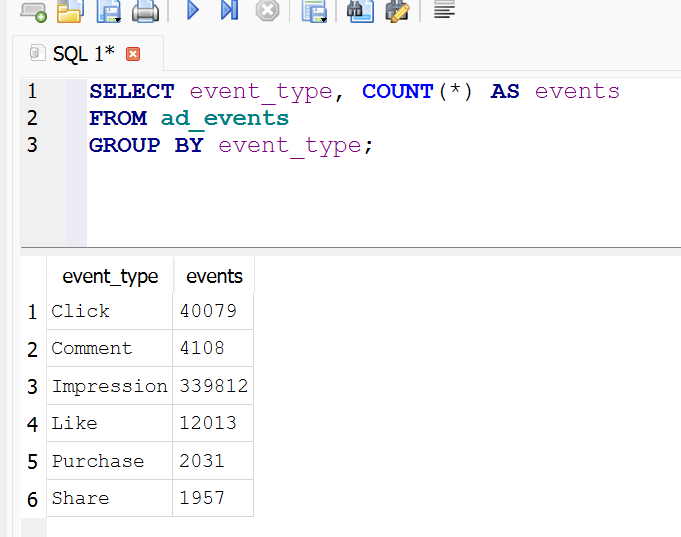
a. Overall Funnel Distribution
b. Unique Users per Funnel Stage
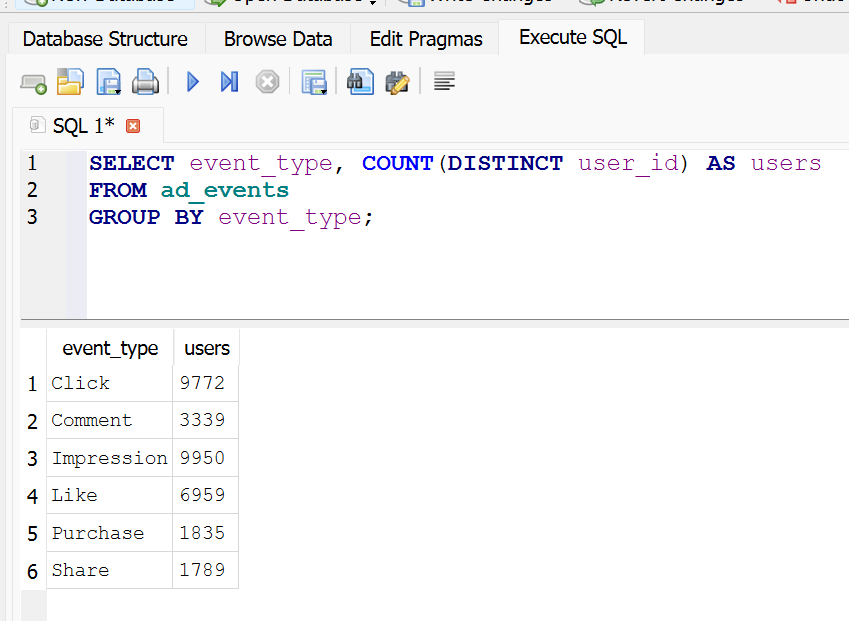
c. User Drop-Off Analysis (Engagement Depth)
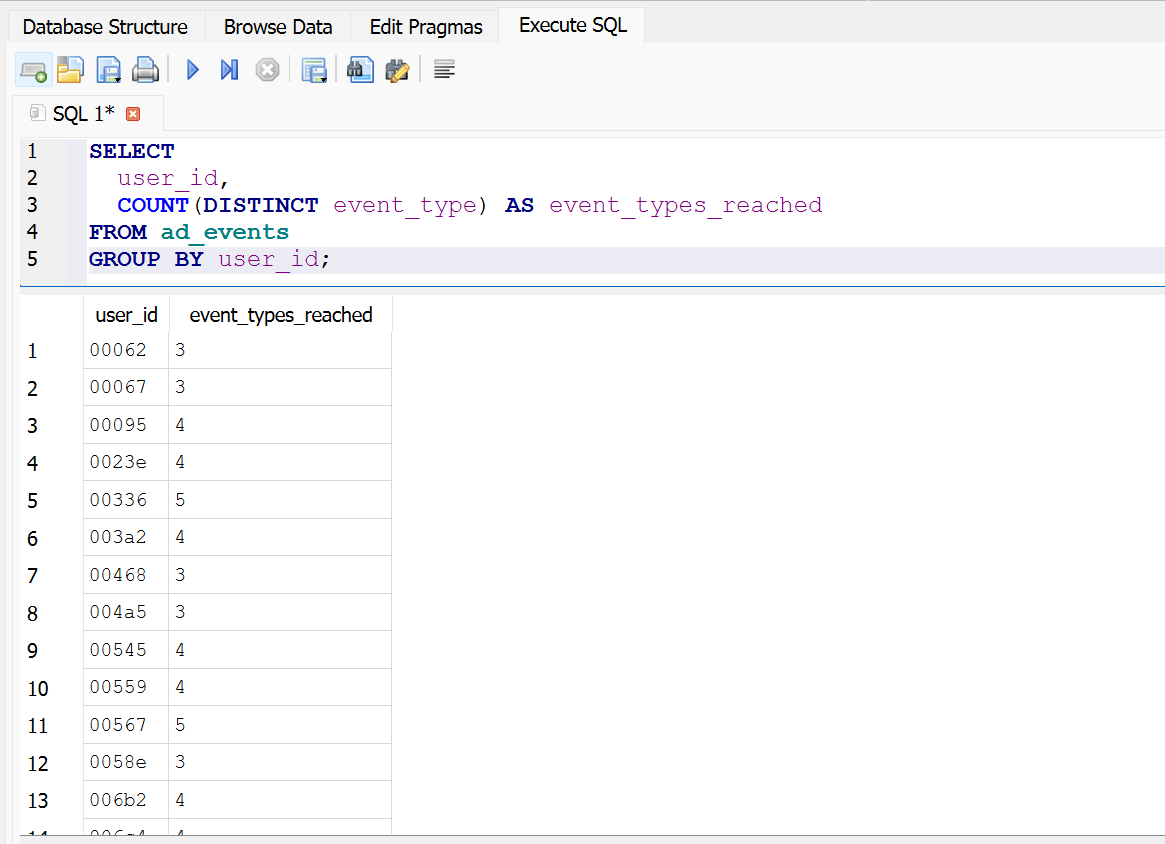
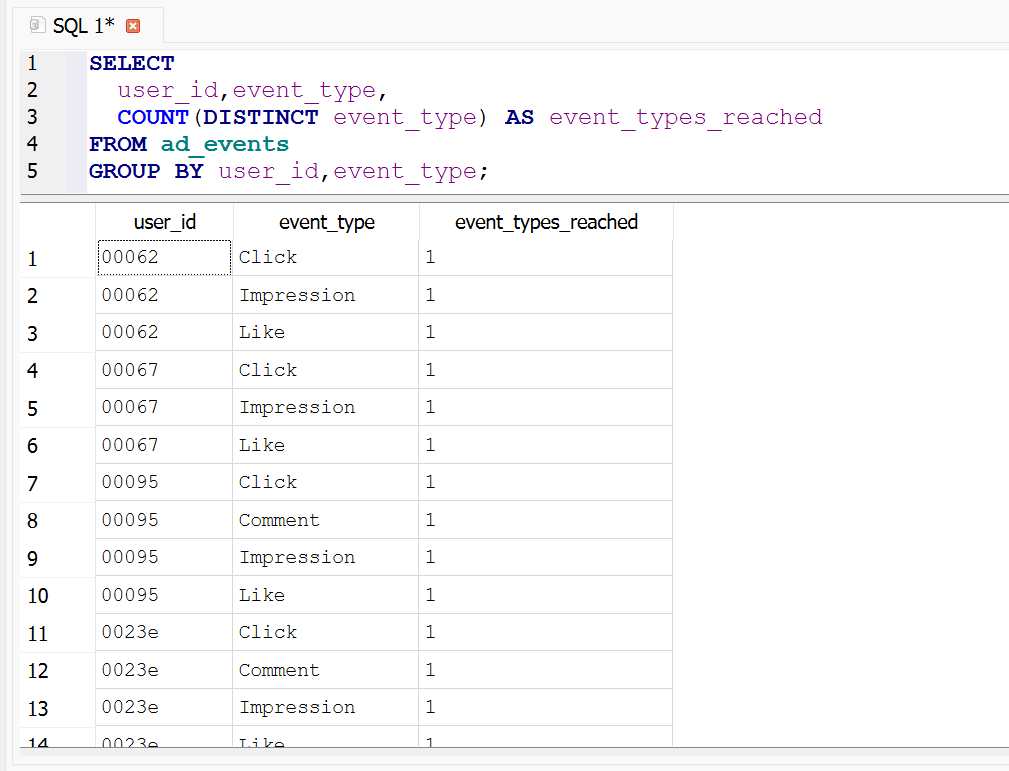
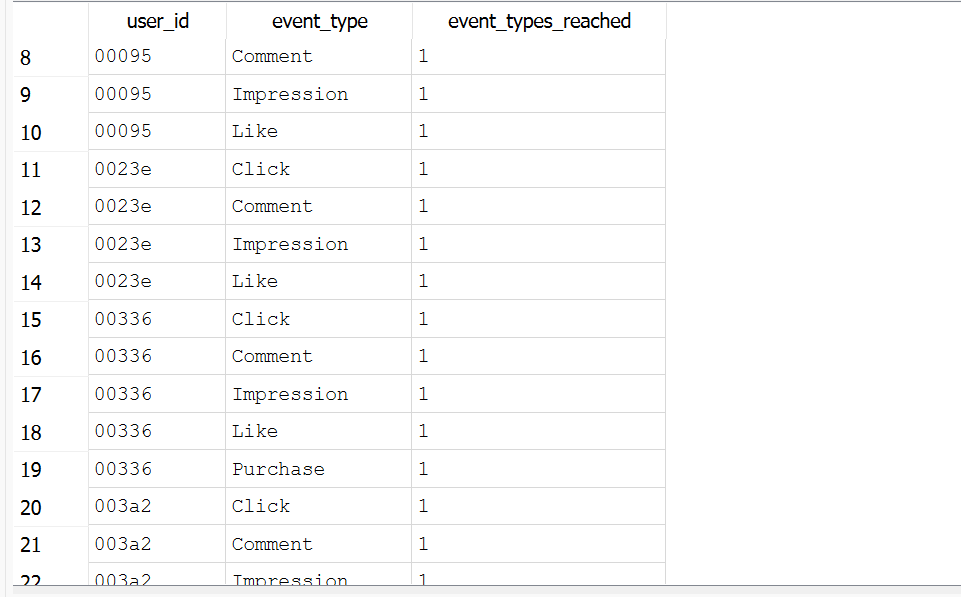
d. Conversion Depth per Ad
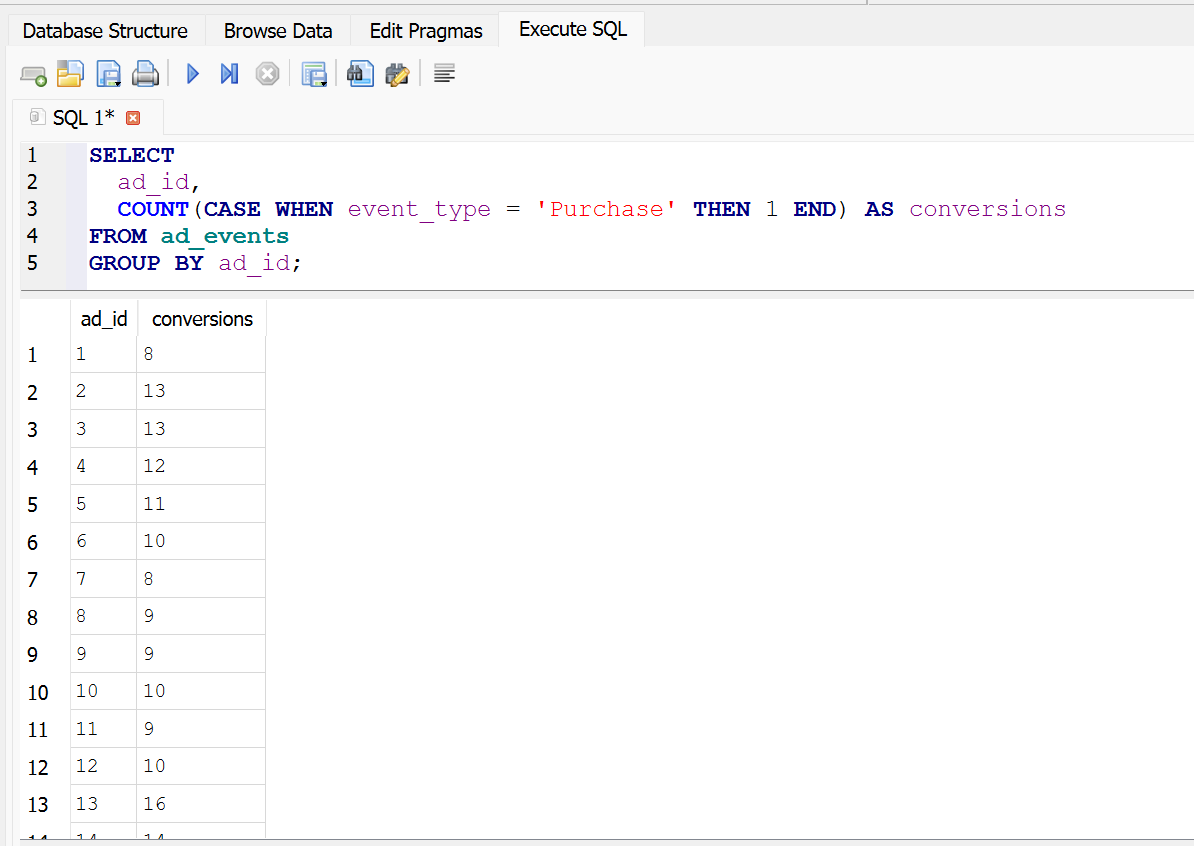
Overall Insight
Most users interact with ads at the impression and click stages, but only a small fraction progress to conversion. This indicates significant funnel drop-offs, suggesting that while awareness generation is strong, conversion efficiency can be improved through better targeting, creative optimization, or landing page experience.
2. Campaign-Level Performance & Budget Efficiency
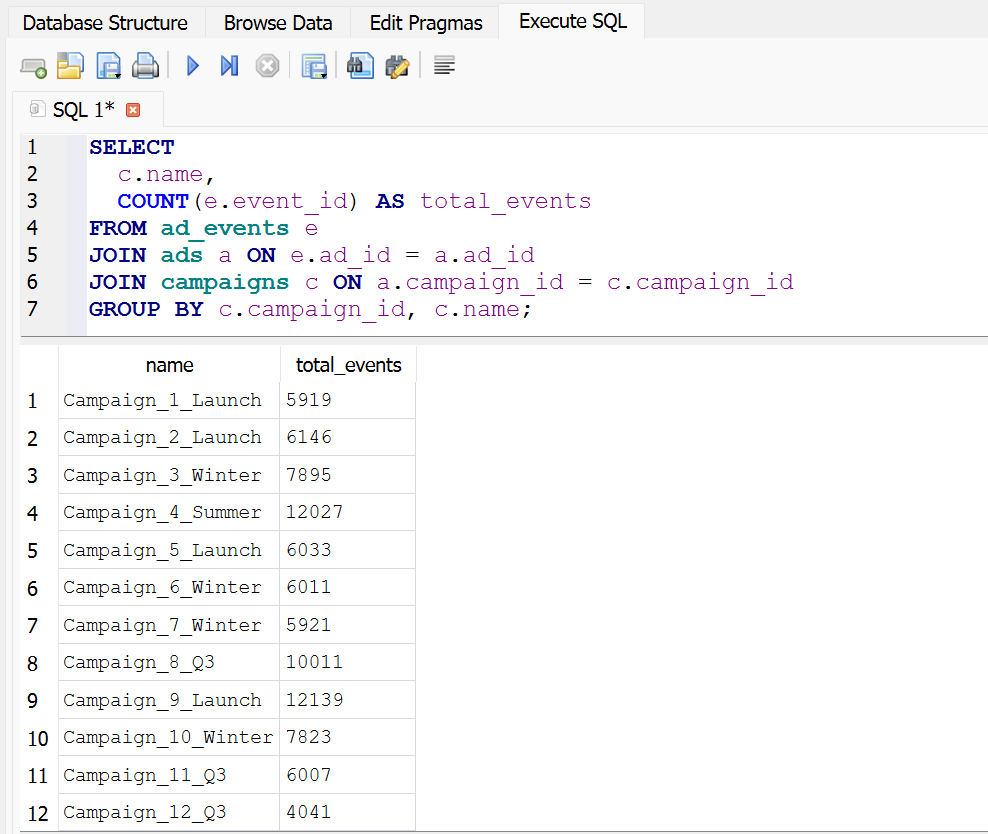
a. Events per Campaign
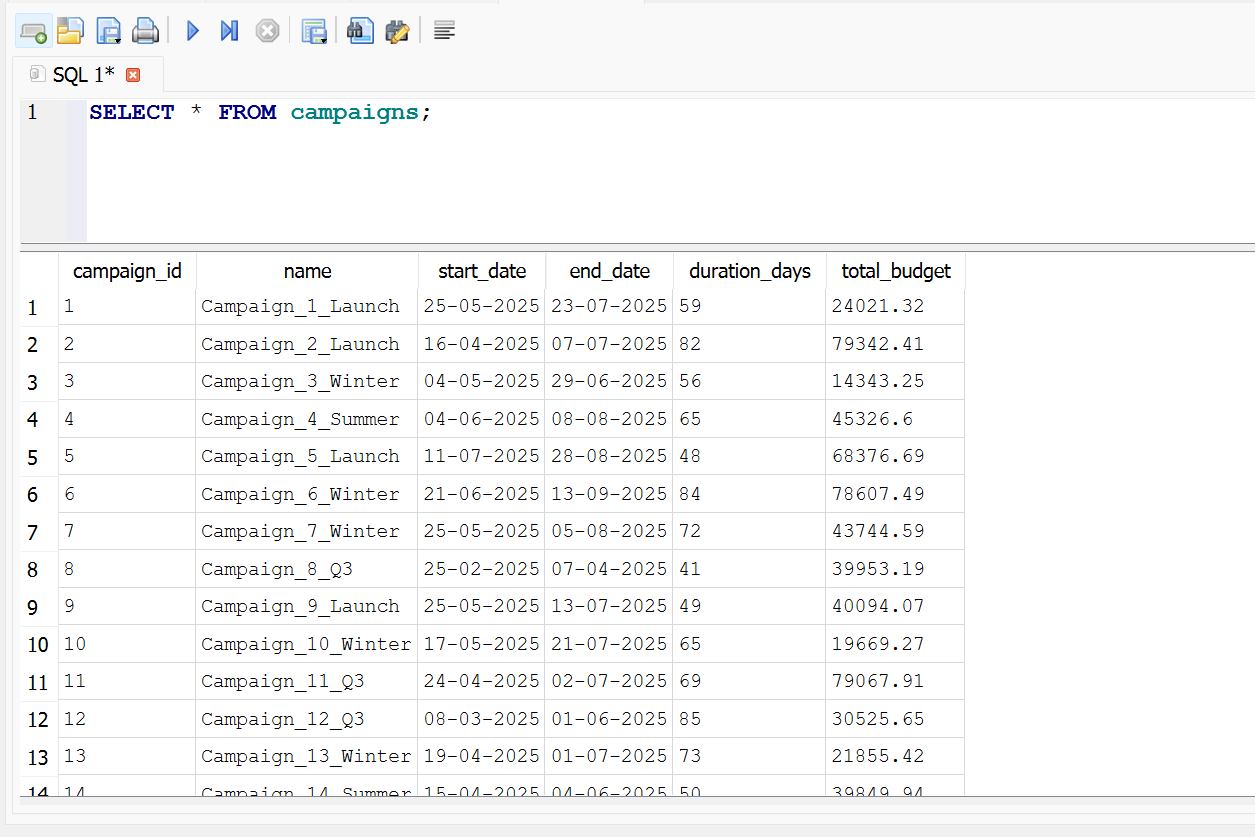
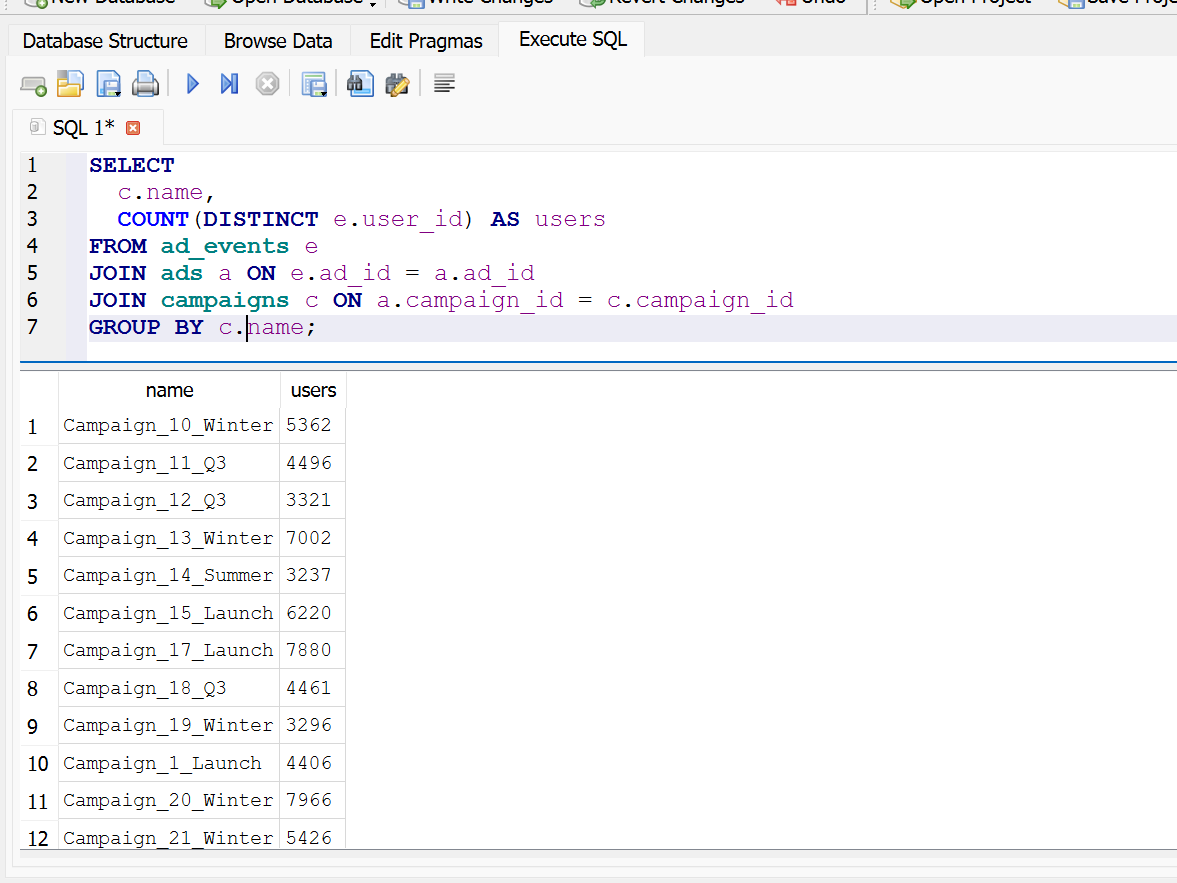
b. Users Reached per Campaign
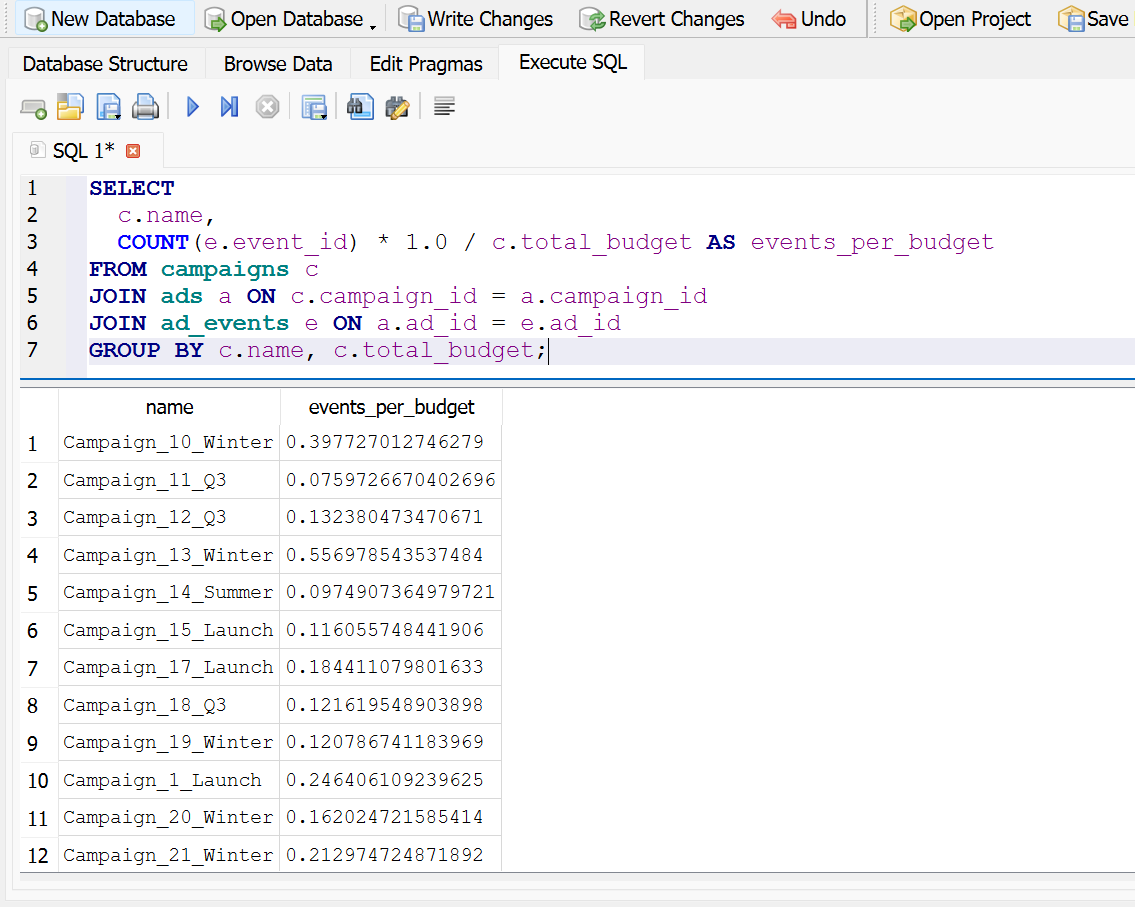
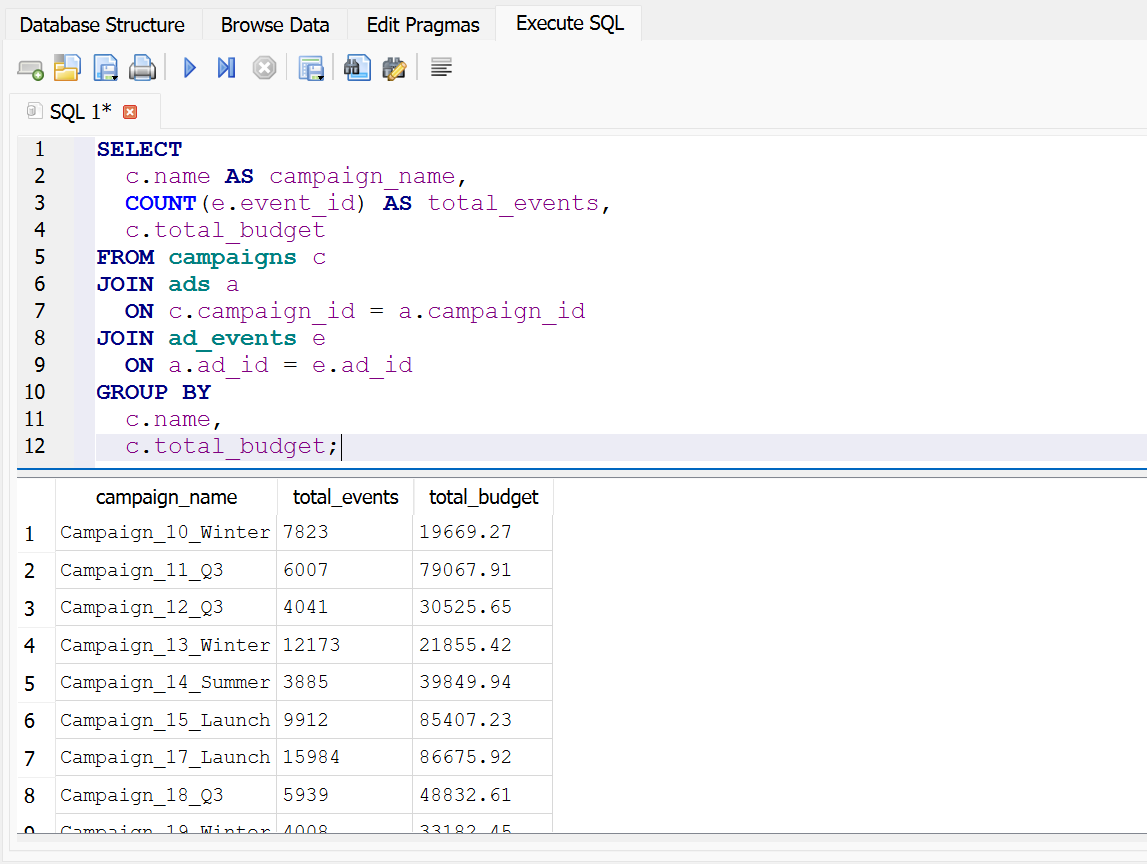
c. Budget Normalization (Events per Budget Unit)
Overall Insight
Campaign-level comparison of total events and allocated budget reveals variations in engagement efficiency. Some campaigns generate high interaction volumes despite moderate budgets, while others show limited engagement relative to their spending, indicating potential optimization opportunities.
3. Platform Performance (Facebook vs Instagram)
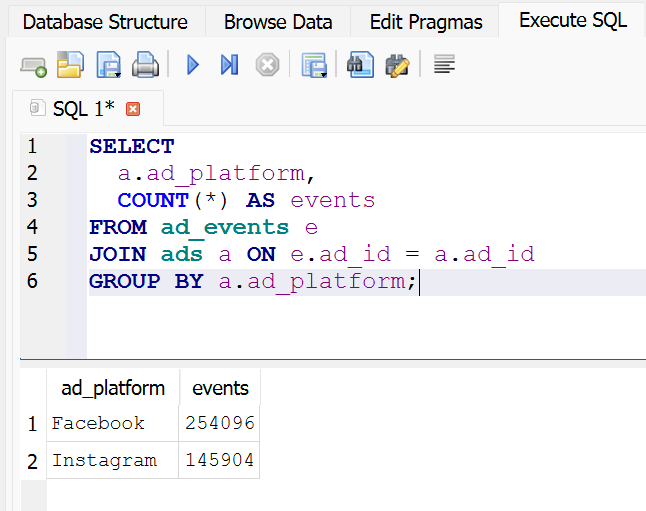
a. Event Volume by Platform
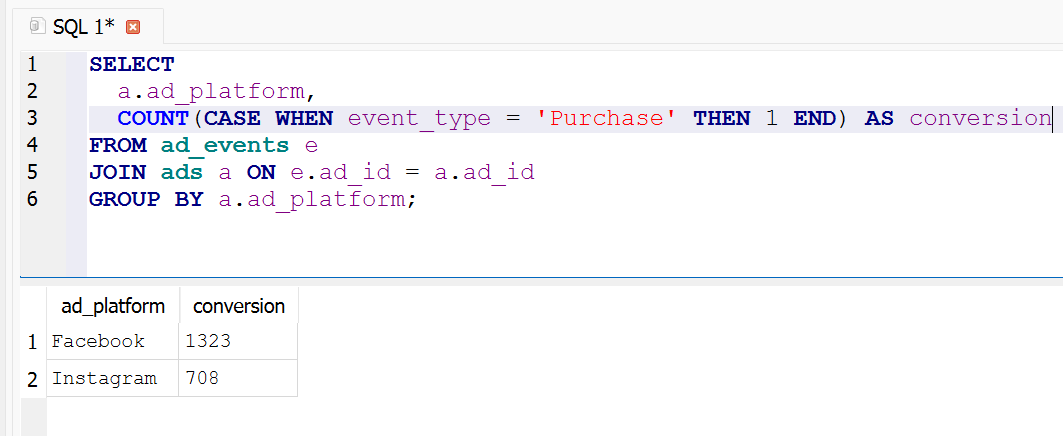
b. Conversion Rate by Platform
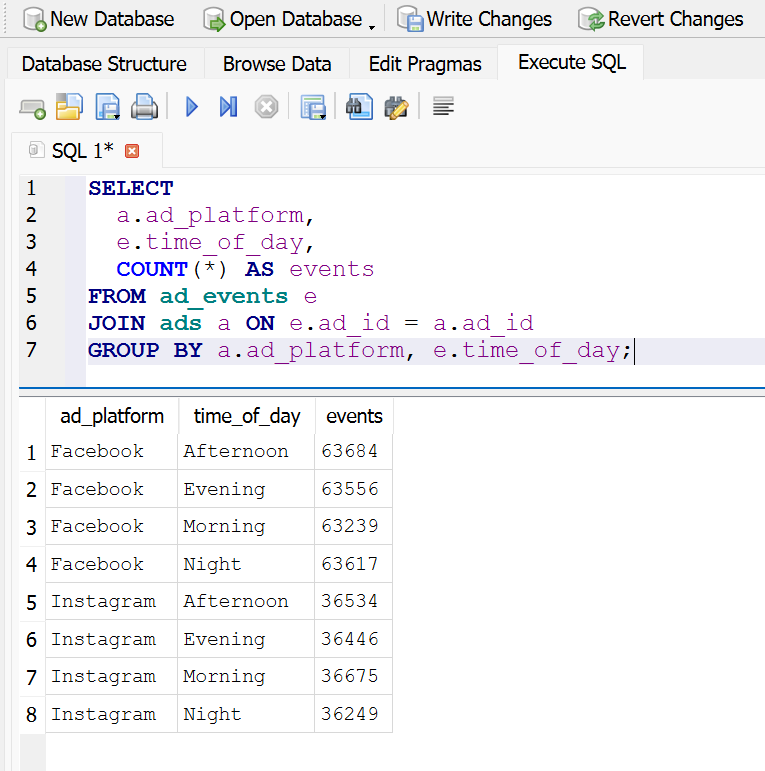
c. Platform and Time Interaction
Overall Insight
Platform performance analysis shows that Facebook and Instagram differ not only in engagement volume but also in conversion effectiveness and time-based user behavior. While one platform may drive higher interaction volume, the other may deliver stronger conversion rates, highlighting the need for platform-specific targeting and scheduling strategies.
4. Audience & Demographic Performance Analysis
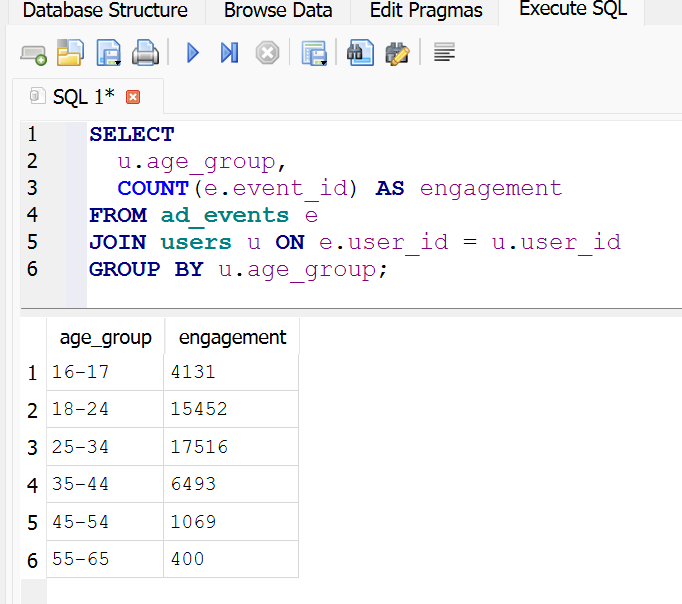
a. Engagement by Age Group
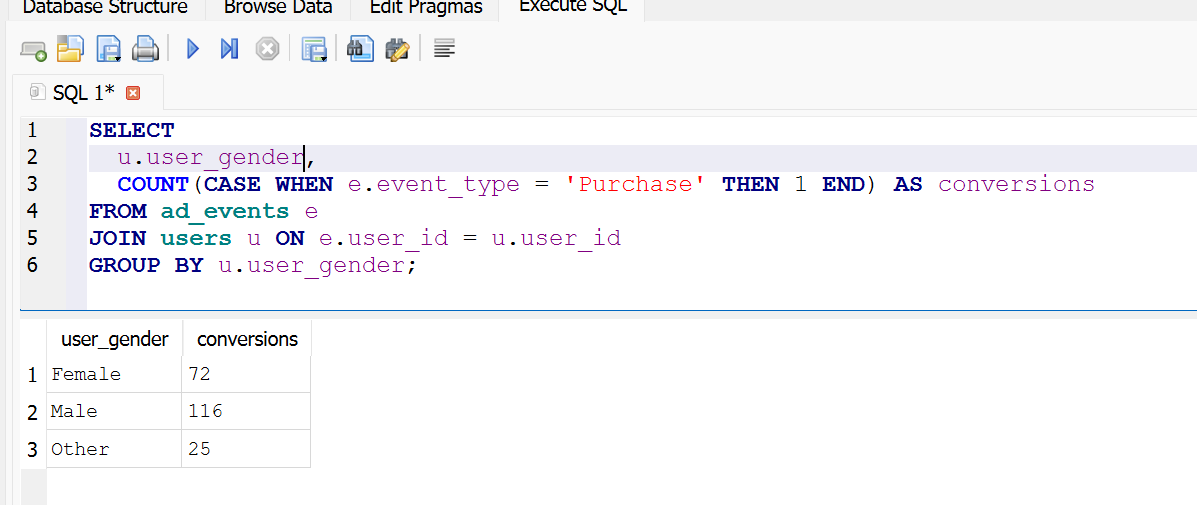
b. Conversion by Gender
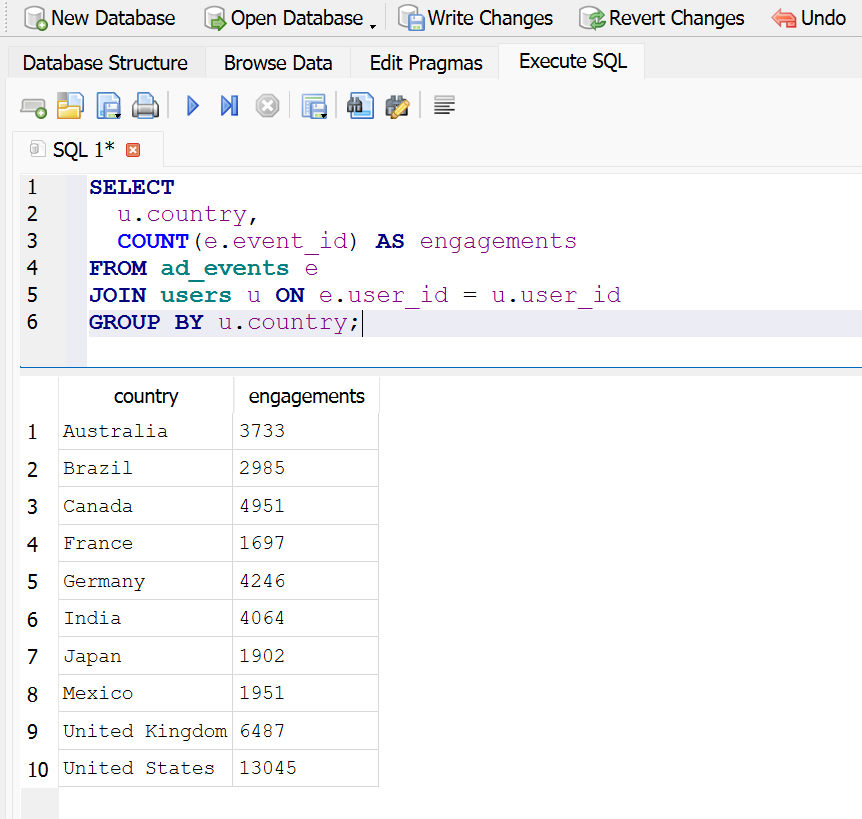
c. Country-Level Engagement
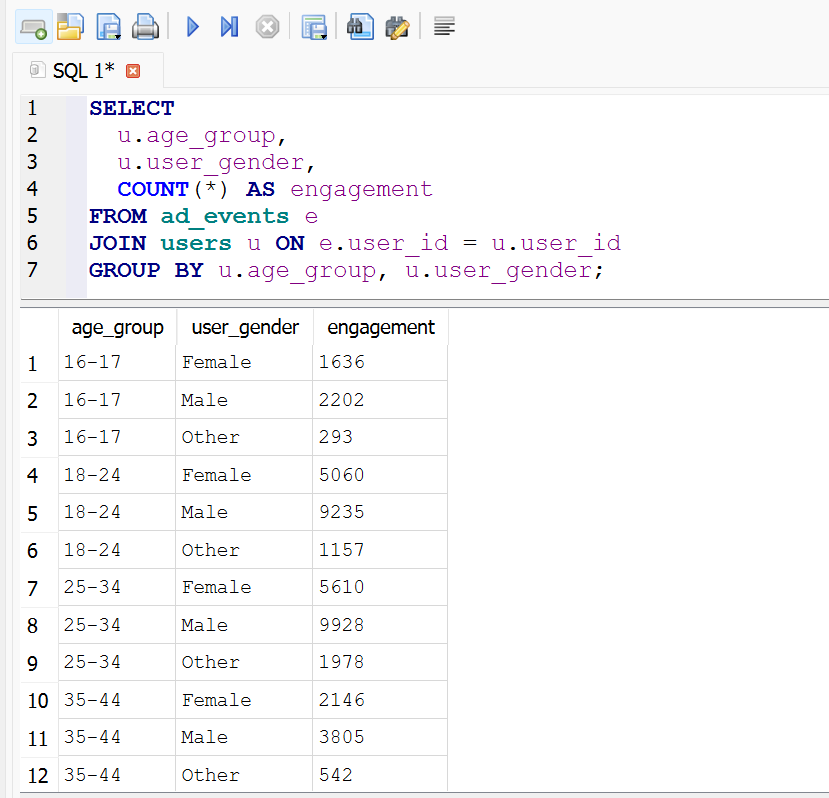
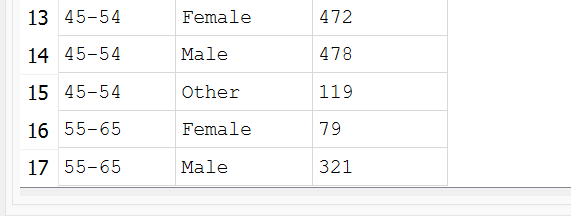
d. Age and Gender Cross-Analysis
Overall Insight
Audience and demographic analysis reveals that engagement and conversion behavior varies across age groups, genders, and geographic regions. Cross-segmentation further highlights specific demographic clusters with higher responsiveness, indicating opportunities for more targeted and efficient advertising strategies.
5. Ad Targeting Alignment Analysis
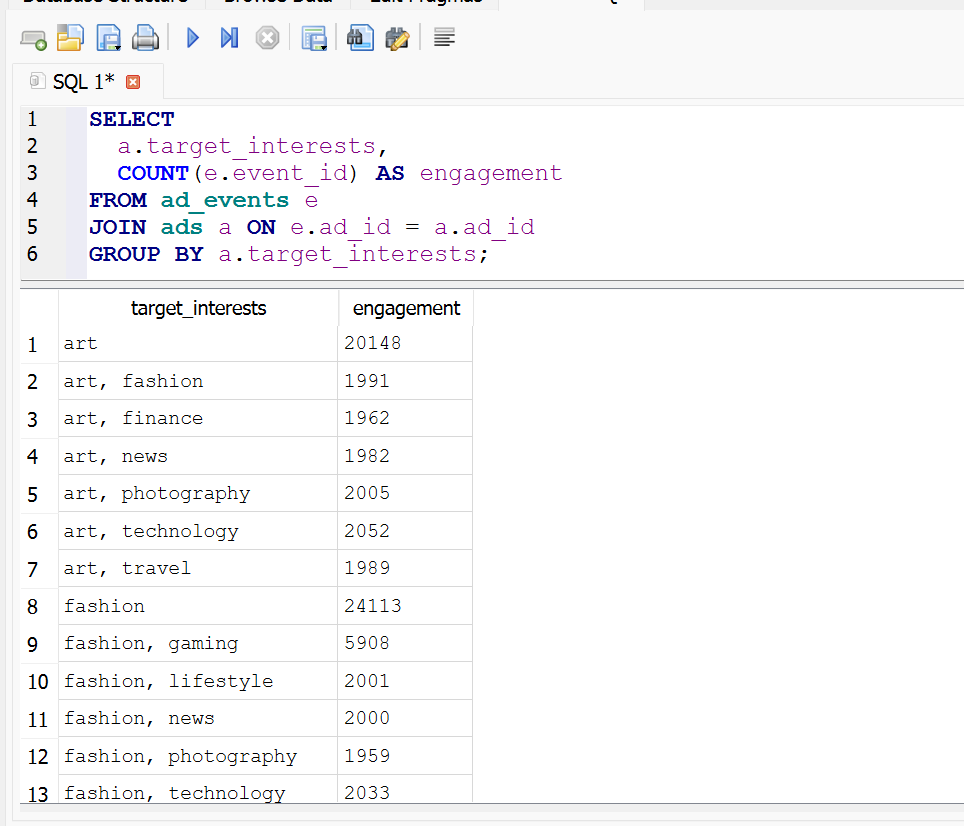
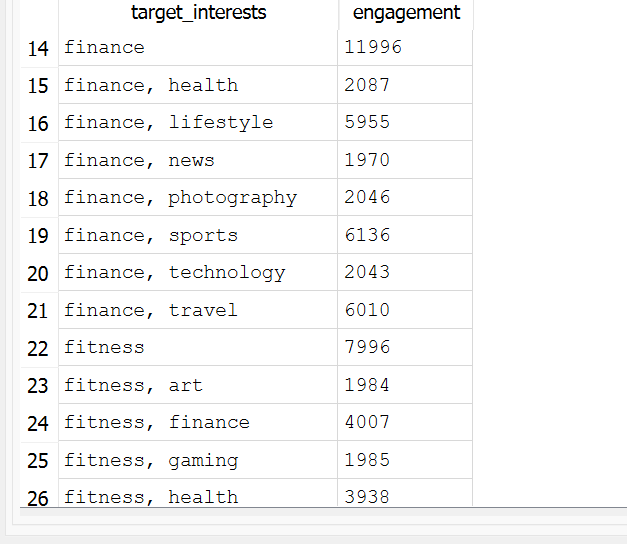
a. Target Interest vs Actual Engagement Volume
b. Mismatch Detection Between Target Interest and User Interest
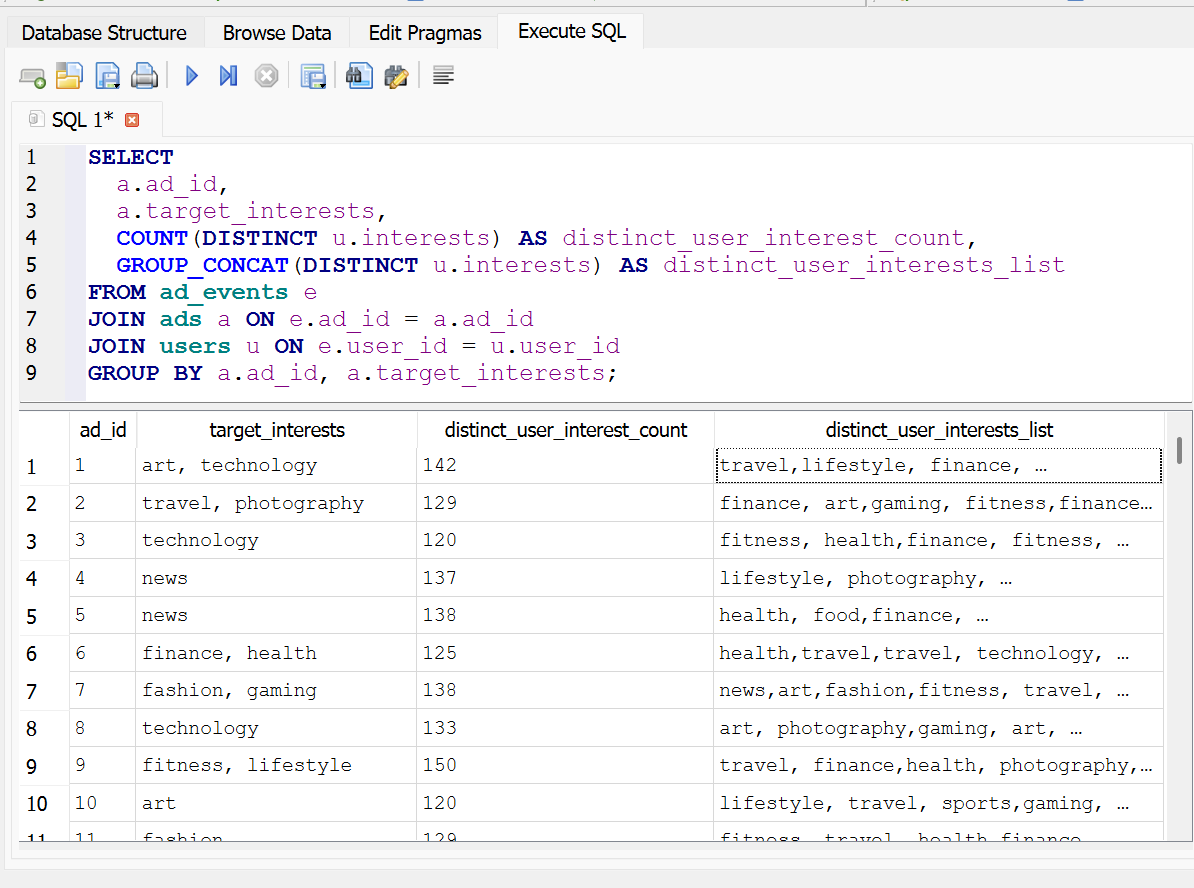
Overall Insight
Ad targeting alignment analysis reveals that while certain interest-based segments perform well, several ads engage users outside their intended interest categories. This mismatch indicates opportunities to refine targeting strategies and improve relevance, thereby reducing inefficient ad spend.
6. Time-Based & Behavioral Patterns
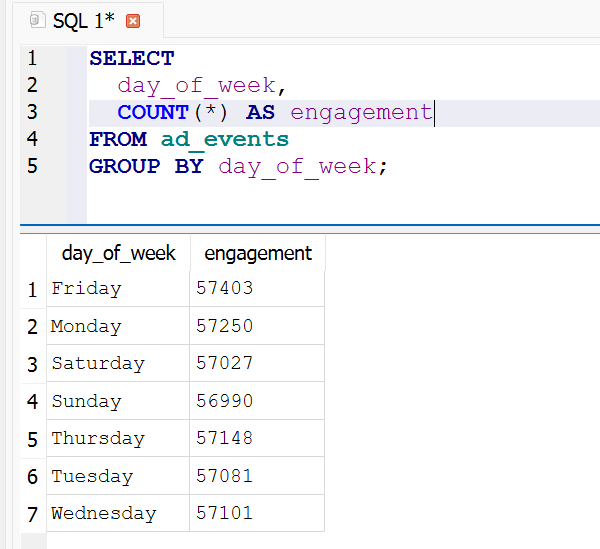
a. Day-of-Week Engagement
b. Time-of-Day Engagement Analysis
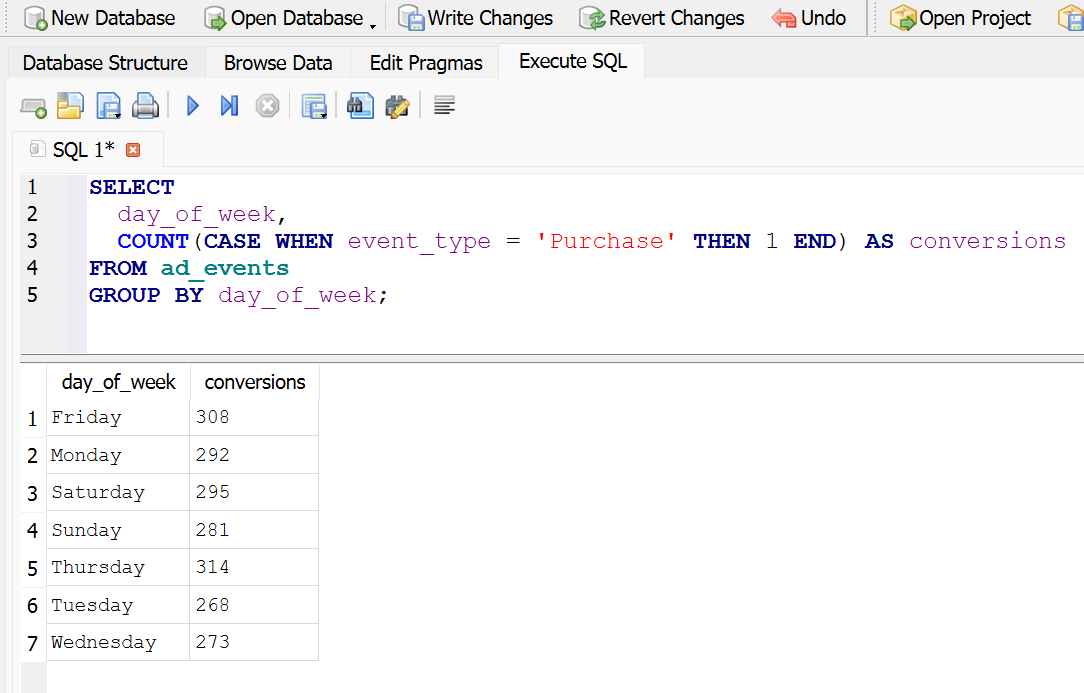
c. Conversion Timing Analysis

Overall Insight
Time-based behavioral analysis indicates that both engagement and conversion activity vary significantly across days of the week and times of day. Identifying peak responsiveness periods enables more efficient ad scheduling and improved campaign performance.
Interactive Visualizations & Dashboard
Key Insights
1. Platform Performance Differences The analysis showed noticeable differences in engagement levels across advertising platforms. Certain platforms generated higher interaction volumes, indicating that platform selection plays an important role in campaign reach and engagement.
2. Campaign-Level Performance Variation Not all campaigns performed equally. Some campaigns generated significantly higher user interactions and engagement events, while others produced comparatively lower engagement despite running during similar time periods. This suggests that campaign strategy, targeting, or creative content may strongly influence performance.
3. Audience Demographics Influence Engagement User demographic analysis indicated that engagement patterns varied across different age groups and gender segments. Certain audience segments interacted with advertisements more frequently, highlighting the importance of precise audience targeting in digital marketing campaigns.
4. Targeting Effectiveness and Audience Alignment By comparing ad targeting parameters with actual user demographics and interests, the analysis revealed cases where ads were reaching audiences outside their intended targeting criteria. This indicates opportunities to improve targeting strategies to ensure ads reach the most relevant audience groups.
5. Time-Based Interaction Patterns User engagement showed variations across different days of the week and time periods. Certain time slots recorded higher interaction levels, suggesting that campaign scheduling can influence engagement outcomes.
6. Identification of Underperforming Ads Some advertisements generated high exposure but relatively low engagement events. These ads may require creative adjustments, improved targeting, or budget reallocation to improve overall campaign effectiveness.
7. Opportunities for Campaign Optimization Combining SQL-based analysis with Power BI visualizations allowed identification of trends in user behavior, campaign performance, and audience interaction. These insights can help marketers optimize ad targeting, allocate budgets more effectively, and focus on audience segments that generate higher engagement.
Overall, the project demonstrates how combining structured SQL analysis with interactive data visualization can provide meaningful insights for improving digital marketing strategies and campaign decision-making.